What Is Hydration Therapy?
Hydration therapy refers to the supervised administration of
fluids designed to support fluid balance, nutrient transport,
and cellular hydration.
Rather than focusing solely on fluid volume, hydration therapy
considers how water and electrolytes move through the body
and support normal physiological processes at the cellular
level.
Why Vida-Flo Designed Two Franchise Models
More than half of the human body is composed of water—yet hydration is far more than simple water content. Water is the primary solvent responsible for maintaining intracellular and extracellular balance, cellular nutrient transport, electrolyte distribution, acid-base homeostasis, and circulatory volume.
Hydration fuels cellular function, supports enzyme behavior, and enables biochemical reactions that produce physiological energy inside mitochondria. Without adequate hydration, cells must adapt to maintain essential functions, often down-regulating energy processes and altering intracellular balance.
Researchers describe hydration as a “master variable” in human physiology because proper fluid balance allows almost every biological system to perform normally.
At the cellular level, hydration underlies immune function, cognitive processes, cardiovascular output, sleep cycles, electrolyte exchange, and metabolic regulation. While hydration is necessary for life, the average modern adult is exposed to environmental and behavioral factors that challenge hydration status every day—air conditioning, heat, caffeine, alcohol, air travel, screens, and stress.
Hydration Is More Than Water Intake
Osmotic gradients, electrolytes, and the science of cellular fluid balance
Intracellular Hydration and Osmotic Balance
Electrolytes are minerals that carry electrical charge. They drive nerve impulses, muscle contraction, fluid
distribution, and nearly
Sodium
Regulates fluid balance and blood pressure
Potassium
Controls muscle and heart function
Magnesium
Supports energy production and nerve function
Calcium
Essential for muscle contraction and signaling
Chloride
Maintains fluid balance and pH
Phosphate
Critical for cellular energy (ATP)

Each plays a role in cellular metabolism, blood pressure regulation, muscle coordination, and brain signaling.Electrolyte imbalance—too high or too low—may influence how fluid moves between cells and into circulation.
The Difference Between Oral and IV Hydration
Important: Intravenous hydration bypasses gastrointestinal processing, allowing fluids to be delivered directly into circulation under medical supervision.
This difference reflects an alternate delivery method and does not imply superiority over oral hydration, which remains essential for daily wellness and nutrition.

Hydration and Energy Production
Human energy (ATP production) occurs primarily inside mitochondria—tiny organelles located within nearly every cell. Mitochondria require proper hydration and electrolyte balance to maintain electrical gradients across the mitochondrial membrane.
While mitochondrial science is still evolving, hydration appears frequently in academic conversations about metabolic energy, perceived fatigue, cellular stress, and recovery. Scientific literature continues to explore how hydration may influence metabolic pathways.
Modern Dehydration: A Hidden Global
Many individuals unknowingly operate at mild dehydration most days due to various lifestyle and
environmental factors:
Heat & Climate
Environmental temperature and sun exposure
Travel
Low cabin humidity and air pressure
Caffeine
Diuretic effects on fluid balance
Alcohol
Dehydrating effects on the body
Air Conditioning
Reduces environmental moisture
Exercise
Sweat loss and electrolyte depletion
Airplane cabins contain extremely low humidity, often below desert levels. Office environments continuously pull moisture from the body. High-sodium foods and caffeinated beverages alter water distribution. Many individuals report fatigue or reduced alertness during dehydration, even without obvious thirst or symptoms.

Learn How Hydration
Works Inside Your Body
Talk with a licensed nurse about hydration support
All additions require medical review and provider authorization.
Performance, Exercise, and Hydration Kinetics
Hydration and Longevity Research
Large research institutions, national research organizations, and high-level academic journals increasingly mention hydration in the context of longevity—not as a curative measure, but as a lifestyle and biological factor associated with metabolic aging, renal function, and total body water changes over the lifespan.
Certain observational studies explore associations between hydration biomarkers, serum sodium ranges, kidney function, and biological age signatures. These studies do NOT demonstrate that IV hydration reverses aging. Instead, hydration is included as a physiological consideration in how humans age, how organs change over time, and how lifestyle behaviors relate to aging trajectories.

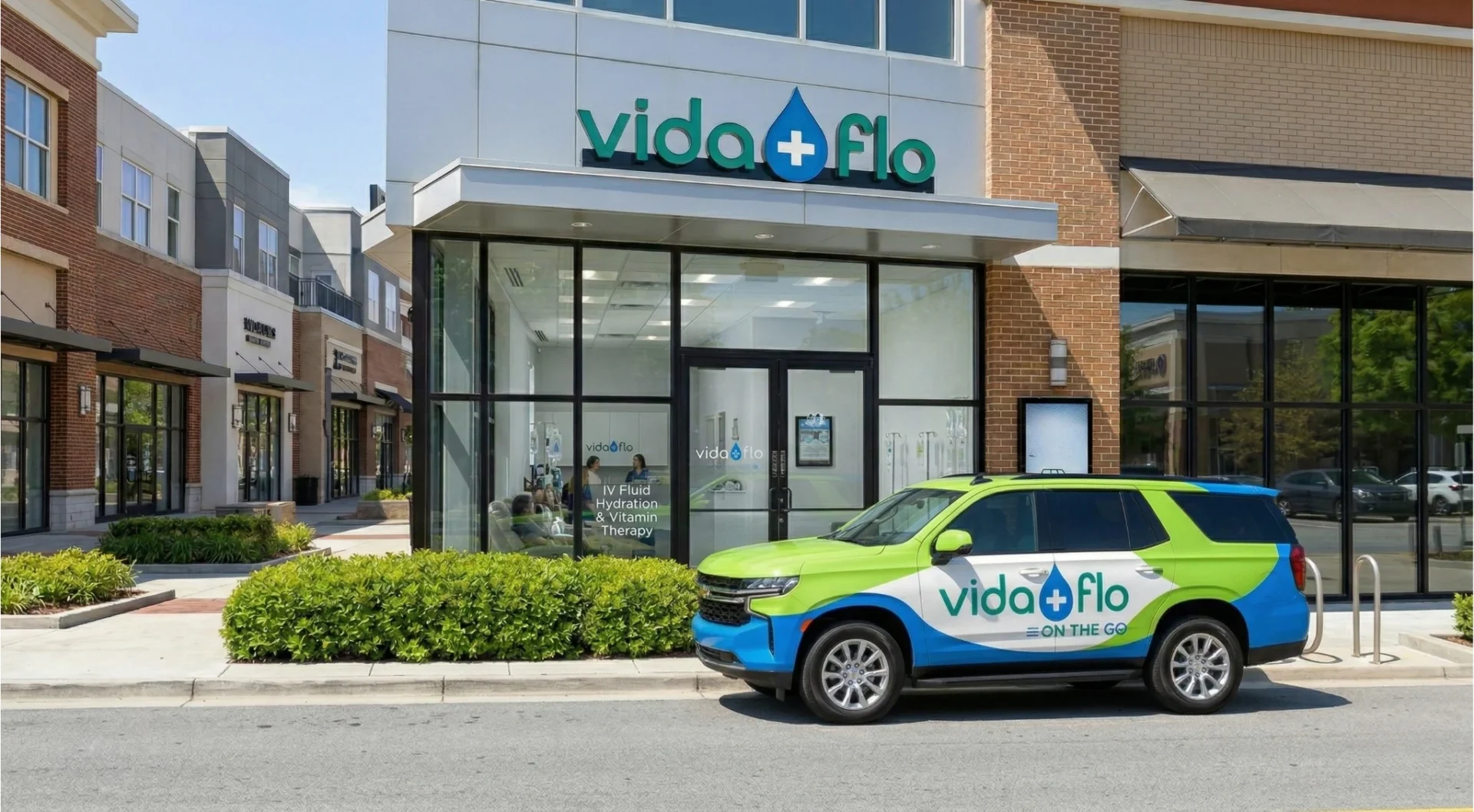
In-Clinic vs Mobile (On-The-Go)
Mobile services must follow the same clinical intake, approval, and safety procedures as brick-and-mortar clinics. OTG services cannot alter clinical standards for convenience. A reset is not about excess. It’s about restoring the environment your body prefers—and rarely experiences in modern life. This is not a placebo effect. This is physiology.
Ask a Nurse
Would you rather we came to you?
On-The-Go brings the same treatment to your home, office or hotel room, usually within 90 minutes.
- How On-The-Go works, including what it costs, how far we travel and how soon we can be there.
Important Compliance Information
This material is provided for educational purposes only and is not medical advice. Hydration therapy does not diagnose, treat, cure, or prevent illness. All hydration procedures require medical evaluation, provider approval, and licensed nurse supervision. Hydration therapy availability varies by state. Individuals experiencing symptoms should seek medical care immediately.
Hydration therapy is NOT emergency care. Hydration services cannot replace urgent dehydration treatment, medical diagnosis, hospital treatment, or IV fluid therapy used for illness. Emergency dehydration must be treated by licensed physicians in acute settings.